Look past the first impression
A beautiful sample can make a material decision feel settled before the useful questions have been asked. The right test begins with the product: its shape, weight, sensitivity and route to the customer. A presentation carton and a shipping pack can be part of the same experience while having very different jobs.
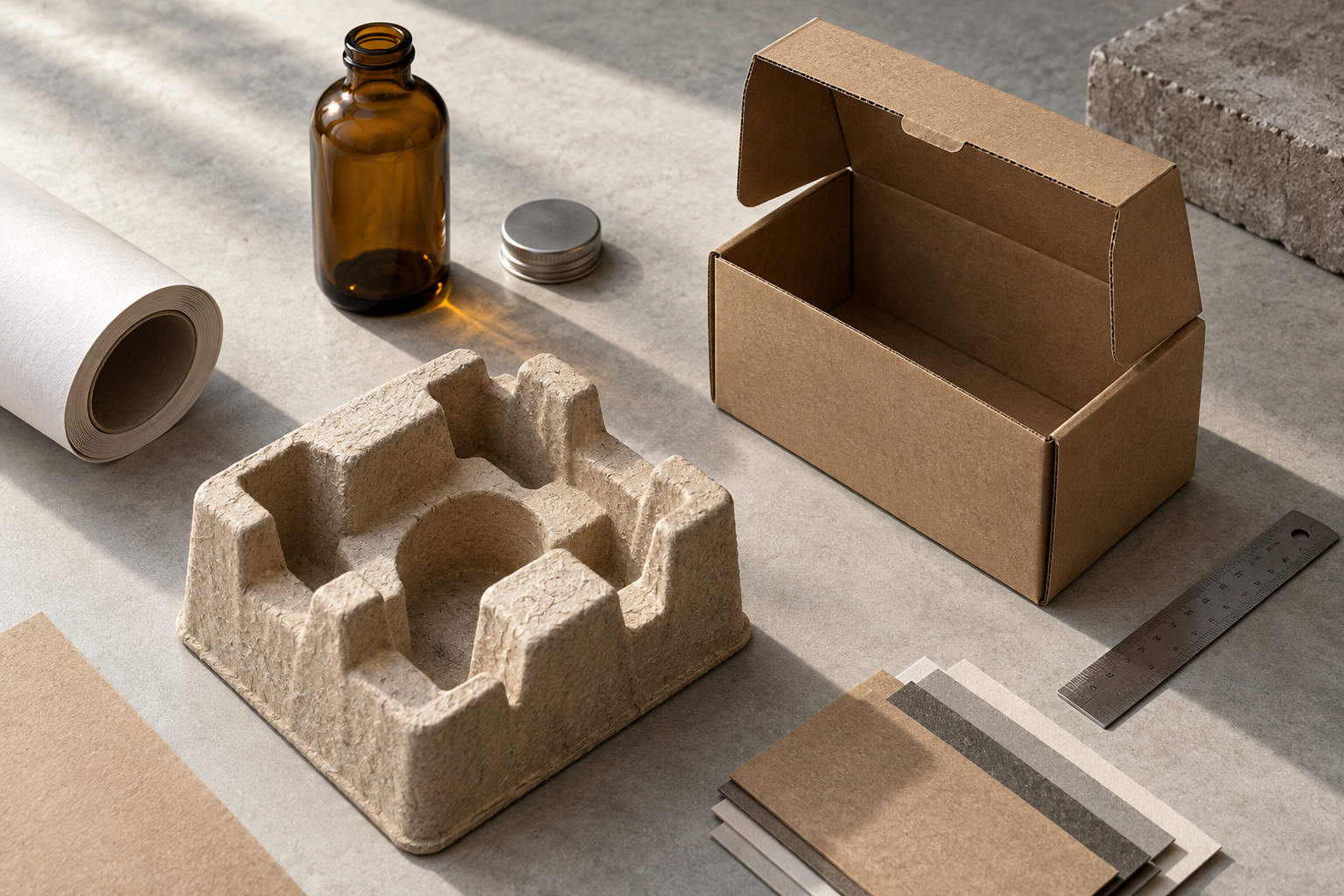
The accompanying still life is a conceptual material study. It is a prompt to compare surfaces and structures, not evidence that a particular combination has passed a packaging test.
Separate surface from structure
A coated outer sheet may look different from the core that supplies stiffness. A paperboard sleeve can carry graphics without being the main protective component. Describe these roles separately when requesting samples. The conversation becomes more precise when “the box” is broken into the parts that actually perform the work.
Write a short test brief
Record what needs to be learned from the sample: fit, opening sequence, print appearance, scuffing or packing speed. Agree the relevant assessment with the supplier. Keep a dated note of the material specification alongside each physical sample so it can be identified again after the meeting.
Handle it as it will be used
Fold the pack, close it, reopen it and place it next to the product. Think about the person filling it and the person receiving it. If a component only works when handled very carefully, ask whether that behaviour matches the intended use.
Make the comparison fair
Use the same product and the same review questions for each option. A material should not win merely because one sample has finished artwork and another is blank. Distinguish the visual preference from the functional result, then decide which compromises the project can accept.